JinkoSolar and Masdar Sign 2GW Tiger Neo Module Purchase Agreement to Support Abu Dhabi's World-First RTC Project
SHANGHAI, May 12, 2026 /PRNewswire/ -- JinkoSolar, the global leading PV and ESS supplier, recently officially signed a strategic supply agreement for 2GW high-efficiency PV modules with Masdar, a global clean energy leader. Under the agreement, JinkoSolar will supply its high-performance Tiger Neo series modules for RTC, the world's first gigascale round-the-clock renewable energy project in Abu Dhabi, ensuring stable and efficient clean power output with premium product strength. The powerful partnership between the two sides will jointly build a new global zero-carbon energy benchmark.
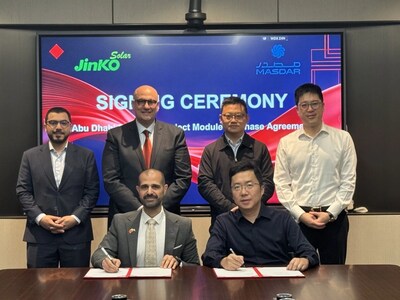
The signing ceremony was witnessed by core senior executives from both parties, including Mohamed Jameel Al Ramahi, CEO of Masdar; Jad Abdel Rahim Masri, Senior Director of Group Supply Chain and Procurement and Manager of Masdar; Abdulla Zayed, Director of Business and Project Development, Masdar; as well as Charlie Cao, CEO of JinkoSolar; Gener Miao, CMO of JinkoSolar; and Robin Li, General Manager of the MEA Sales Centre of JinkoSolar. This cooperation fully reflects Masdar's high recognition of JinkoSolar's product quality, delivery capability and global localized service system, and further proves that JinkoSolar Tiger Neo modules have become the preferred core product for the world's top large-scale new energy projects.
Located in Abu Dhabi, RTC is the world's first gigascale renewable energy project integrating solar power and battery energy storage. Jointly developed by Masdar and the Emirates Water and Electricity Company (EWEC), the project integrates a 5.2GW solar photovoltaic (PV) plant with a 19 gigawatt-hour (GWh) battery energy storage system (BESS), the largest and most technologically advanced system of its kind in the world.
RTC reimagines the potential of renewable energy by overcoming intermittency. Once operational, the project will produce gigascale baseload energy at a globally competitive rate for the first time, setting a new international benchmark and reaffirming the UAE's position in renewable energy development. The project will act as a blueprint that can be replicated internationally to meet the growing demand for clean, secure, round-the-clock power.
The Tiger Neo modules supplied by JinkoSolar fully comply with the technical standards for specialized modules tailored for the project scenarios, upgraded based on the mature and advanced N-type TOPCon technology platform.
The successful signing of the 2GW module purchase agreement marks an important milestone for JinkoSolar's deep development in the high-end Middle Eastern new energy market and the long-term strategic partnership with Masdar. Moving forward, JinkoSolar will fully support the efficient construction and advancement of RTC through high-quality product delivery and localized technical services. JinkoSolar will continue empowering the implementation of large-scale global new energy supporting zero-carbon projects with top-tier PV products and accelerate the high-quality green and low-carbon energy transformation together with global partners.
Photo - https://mma.prnewswire.com/media/2977916/JinkoSolar_Masdar.jpg
 View original content:https://www.prnewswire.co.uk/news-releases/jinkosolar-and-masdar-sign-2gw-tiger-neo-module-purchase-agreement-to-support-abu-dhabis-world-first-rtc-project-302769410.html