JCET Reports 79.4% YoY Growth in H1 2026 Net Profit Attributable to Shareholders, Accelerates Advanced Packaging Expansion
SHANGHAI, Aug. 20, 2026 /PRNewswire/ -- JCET Group (SSE: 600584), a leading global provider of integrated circuit (IC) back-end manufacturing and technology services, today announced its financial results for the first half of 2026.
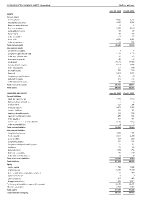
Revenue for the first six months of 2026 reached RMB 19.53 billion, an increase of 5.0% year over year and a record for any first-half period in the company's history. Net profit attributable to shareholders totaled RMB 840 million, up 79.4% from the prior-year period, while adjusted net profit attributable to shareholders, excluding non-recurring items, increased 84.7% year over year to RMB 810 million, reflecting stronger operating performance and improved profitability across the business.
For the second quarter, revenue rose to RMB 10.36 billion, increasing 11.7% year over year and 12.9% sequentially to a record level for the period. Net profit attributable to shareholders reached RMB 550 million, representing growth of 107.3% from a year earlier and 91% from the previous quarter.
Growth during the first half was driven by robust demand from artificial intelligence infrastructure markets, which continued to support recovery across the semiconductor industry. Benefiting from increasing customer orders and higher factory utilization across its global manufacturing network, JCET delivered broad-based growth across key end markets and service offerings.
As AI deployment accelerates worldwide, demand is expanding across the entire infrastructure stack, including computing, memory, interconnect and power delivery. Leveraging its comprehensive portfolio of heterogeneous integration technologies and manufacturing capabilities, JCET continued to strengthen solutions that enable higher performance, greater integration and improved energy efficiency for next-generation AI systems. Revenue from the company's computing electronics business increased 40.4% year over year in the first half. Automotive electronics revenue also continued to grow, rising 25.0%, while testing services recorded revenue growth of 9.4%. The ongoing optimization of JCET's diversified business portfolio contributed to both top-line expansion and stronger earnings performance.
To support long-term growth, JCET continued to invest in technology innovation and manufacturing capacity while advancing both leading-edge packaging and next-generation mainstream packaging solutions. Research and development expenses totaled RMB 1.03 billion during the first half, representing 5.3% of revenue.
In June, the company announced a RMB 7.8 billion investment to build a new advanced packaging and testing manufacturing facility in Shanghai. In July, JCET established a wholly owned subsidiary with registered capital of RMB 4 billion to support project implementation, marking another important step in expanding its high-end advanced packaging footprint.
JCET also continued to enhance operational efficiency through disciplined cost management and productivity improvement initiatives, supporting further margin expansion. In addition, the company established an overseas Finance and Treasury Centre in Singapore, enabling a more centralized approach to global treasury operations, strengthening risk management capabilities and enhancing the resilience of its worldwide operating platform.
Mr. Li Zheng, CEO of JCET Group said, "AI is reshaping both computing infrastructure and semiconductor architectures, while expanding the role of advanced packaging from manufacturing execution to product innovation and system-level performance enablement. Against this backdrop, JCET continued to capitalize on opportunities across the AI value chain during the first half of 2026, supported by our global R&D, manufacturing and customer service network. We further strengthened our technology and product portfolio in key growth areas, driving continued improvement in both scale and profitability. Looking ahead, we will continue to support our customers' innovation with differentiated semiconductor manufacturing solutions and deliver sustainable, high-quality growth."
For more information, please refer to the JCET 2026 H1 Report
About JCET Group
JCET Group is a global leader in integrated circuit back-end manufacturing and technology services. We provide comprehensive turnkey solutions, including semiconductor package integration design, wafer probing, bumping, assembly, final testing, and global drop shipments.
Utilizing advanced wafer-level packaging, 2.5D/3D packaging, System-in-Package solutions, and reliable flip chip and wire bonding technologies, we support a wide range of applications, including automotive, artificial intelligence, high-performance computing, storage, communication, smart devices, industrial and medical sectors, and power and energy. With eight manufacturing facilities across China, Korea, and Singapore, we deliver efficient supply chain solutions and maintain close collaboration with our global customers.

 View original content to download multimedia:https://www.prnewswire.co.uk/news-releases/jcet-reports-79-4-yoy-growth-in-h1-2026-net-profit-attributable-to-shareholders-accelerates-advanced-packaging-expansion-302856599.html