Artlist and Secret Level Partner with Legendary Horror Producer Steven Schneider for Landmark AI-Hybrid Feature Film, 'Terrarium'
Producer of the Paranormal Activity and Insidious franchises teams with AI-native studio Secret Level and Artlist AI Platform for the first union-compliant AI-powered feature film
TEL AVIV, Israel, May 27, 2026 /PRNewswire/ -- In a major milestone at the inflection point of filmmaking and technology, Artlist, the leading AI production platform, has officially signed its first full-length feature film: Terrarium, a hybrid horror feature financed and produced by Artlist alongside legendary genre producer Steven Schneider and pioneering AI-native studio Secret Level.
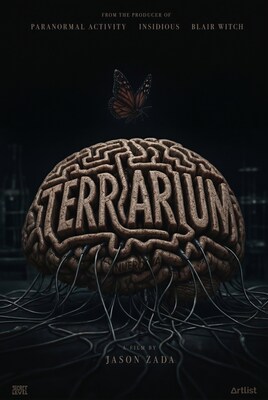
Schneider, the producer behind iconic horror franchises including Paranormal Activity and Insidious, anchors a project that signals one of the most significant moves yet by establishing Hollywood into the next generation of production. Terrarium also marks a reunion between Schneider and Jason Zada, who previously collaborated on the genre film The Houses October Built.
Terrarium, which is currently in production, is written and directed by Emmy-winning filmmaker Jason Zada (The Forest, Focus Features). The film is produced by Christina Lee Storm (Nate Parker's Newborn, Jurassic Punk) for Secret Level.
The high-concept horror project represents a bold leap forward in the evolution of entertainment production: a hybrid production where AI-powered tools and traditional filmmaking craftsmanship work hand in hand, in a fully DGA and SAG-AFTRA-compliant workflow. At the center of the partnership is the integration of the Artlist AI platform directly into Secret Level's proprietary AI filmmaking pipeline, supporting a large-scale, cinema-grade production designed for feature-length storytelling.
"What drew me to Terrarium was Jason. He has a rare ability to make audiences experience something they can't explain, something that stays with them long after the lights come on. With Terrarium he's pushing into completely new territory. The way he's making this film is unlike anything I've been a part of in twenty years of genre filmmaking." - Steven Schneider
"This partnership is an incredible milestone not only for Artlist, but for the future of filmmaking itself," said Artlist Co-Founder and Co-CEO Ira Belsky. "Terrarium is proof that AI can enhance the creative process in ways that empower artists, directors, designers, and storytellers to dream bigger and execute at an entirely new level. This is about expanding creative possibilities and not replacing human imagination."
Artlist will serve as financier and Executive Producer on the film, marking the company's official entry into feature filmmaking and further cementing its role at the intersection of technology, entertainment, and creative innovation. Terrarium is in active pre-production.
About Artlist
Artlist is the leading creative AI technology platform powering the next era of video production. Artlist empowers creators, teams, and studios to achieve high-end production through a secure, professional-grade ecosystem. By combining cutting-edge generative AI for video, image, music, and voiceover with a world-class catalog of stock assets, Artlist provides the tools and workflows to scale confidently, trusted by over 50 million creators and global brands, including Google, Amazon, and Microsoft. For more information, visit artlist.io.
About Secret Level
Secret Level is the leading AI-native entertainment studio, merging proprietary AI-powered technology with world-class storytelling. With divisions spanning brand campaigns, Hollywood narrative and long-form, and interactivity, Secret Level develops original IP, co-produces with major studios, and delivers globally recognized creative for partners like Coca-Cola, Google, and Kalshi. https://www.secretlevel.co
Photo: https://mma.prnewswire.com/media/2988776/AI_Hybrid_Feature_Film_Terrarium.jpg
Contact:
Ravit Shimony
PR and Communications Manager, Artlist
pr@artlist.io
 View original content:https://www.prnewswire.co.uk/news-releases/artlist-and-secret-level-partner-with-legendary-horror-producer-steven-schneider-for-landmark-ai-hybrid-feature-film-terrarium-302783268.html